
Archaeological Sites
83 photos
Costa Rica's most important and popular archaeological sites are depicted here.
Browse Archaeological Sites
Selected photos: Archaeological Sites
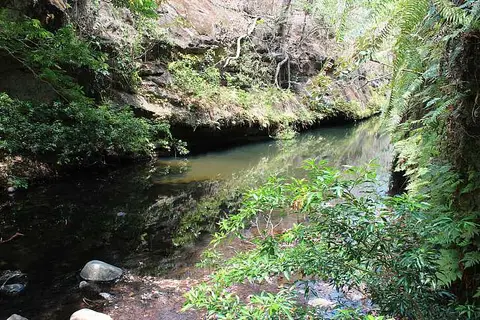 Cabuyo River
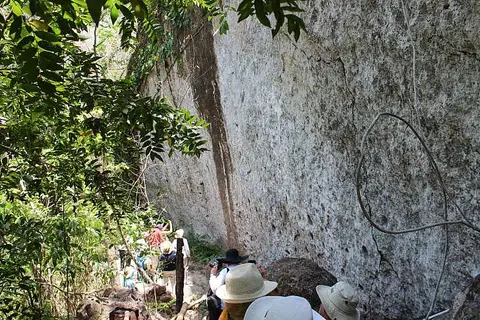 El Farallon Petroglyph Wall
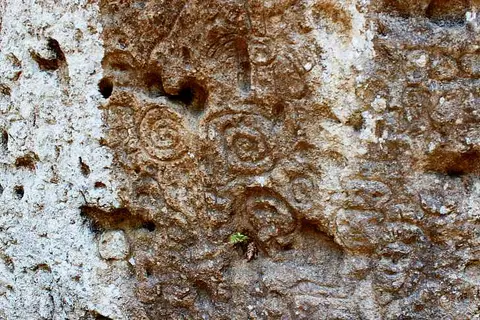 Spiral Petroglyph
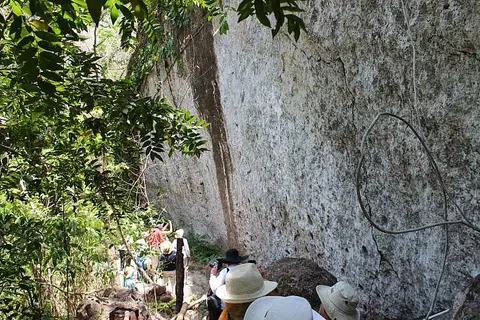 El Farallon Petroglyph Wall
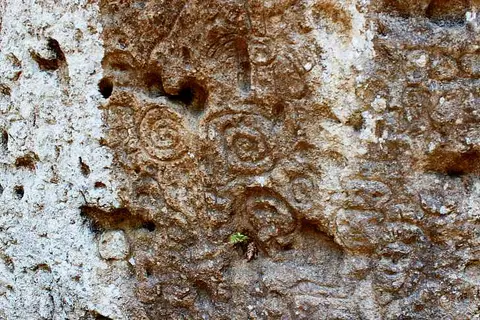 Spiral Petroglyph
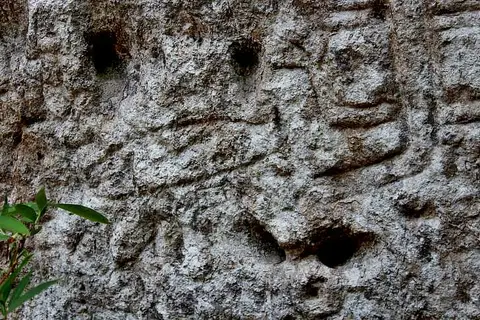 Fish Petroglyph
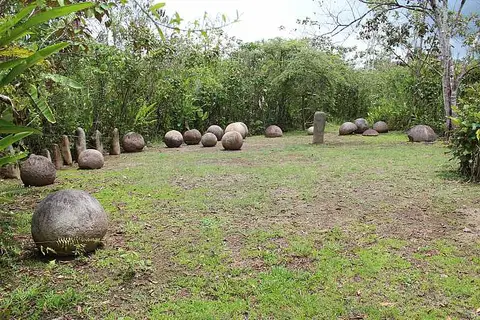 Spheres Park
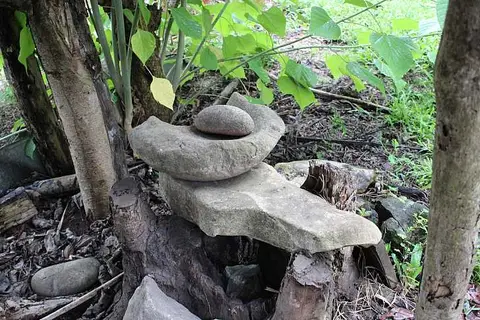 Grinding Stones
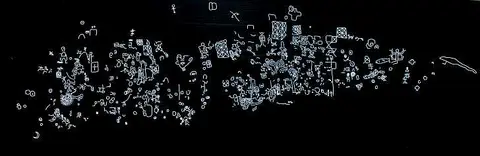 Petroglyphs Map
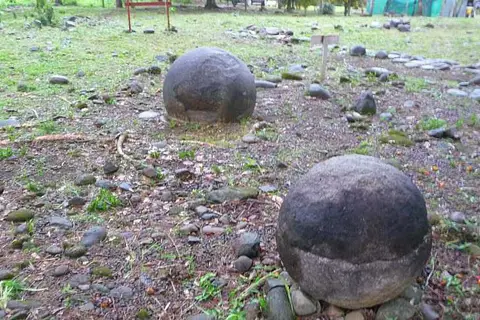 Spheres
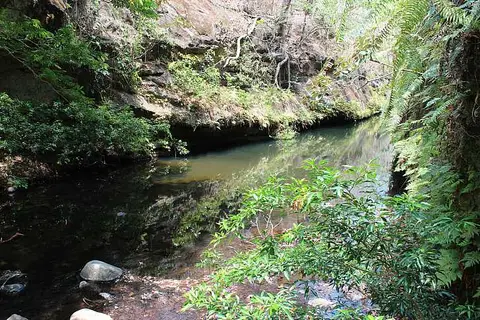 Cabuyo River
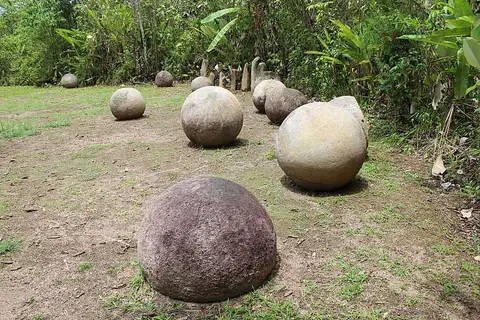 Esferas
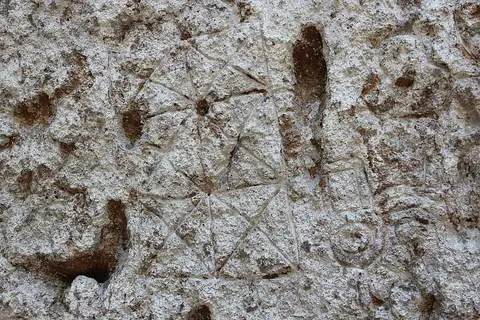 Squares Petroglyph
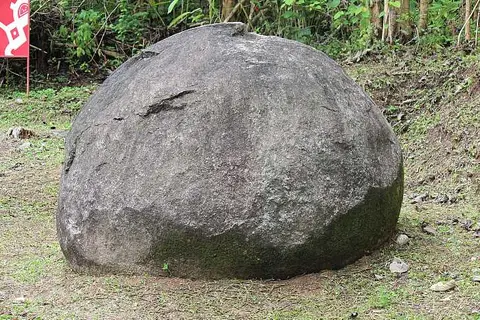 El Silencio Stone Sphere
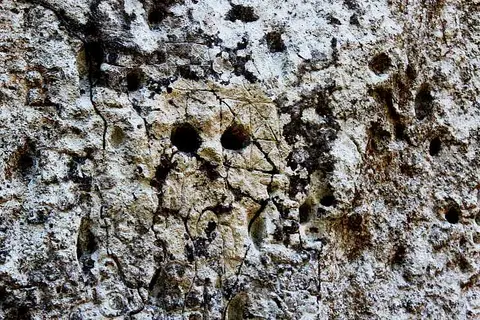 Petroglyph with holes
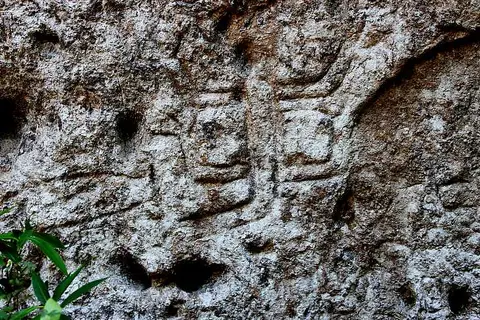 petroglyph
 Metate
 Tour Group
 Entrada al Museo
 Petroglyphs Map
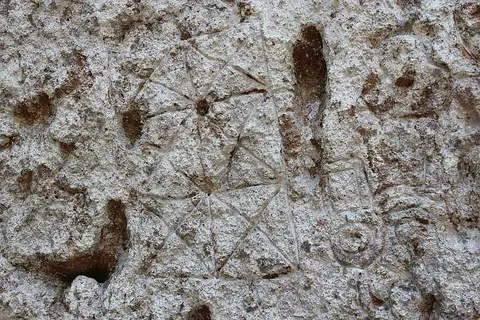 Squares Petroglyph
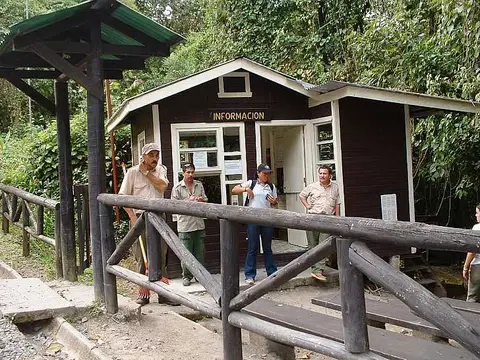 Park entrance
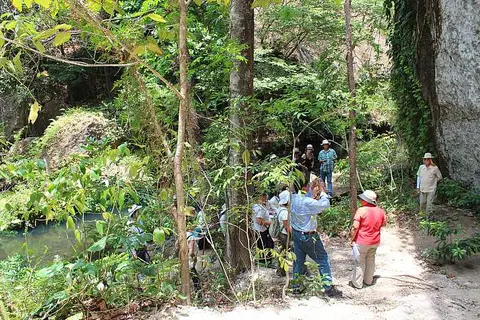 Tour Group
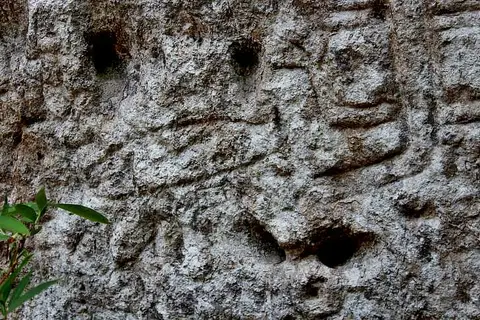 Fish Petroglyph
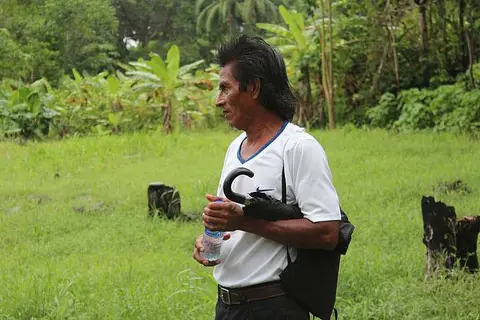 Don Juan Bautista
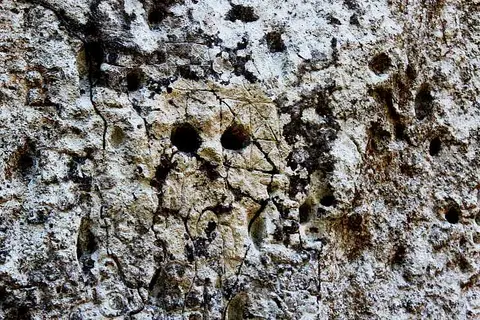 Petroglyph with holes
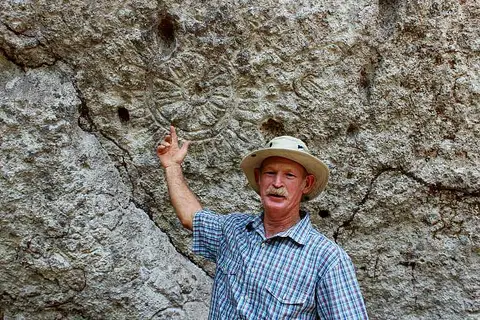 Lopez Brother
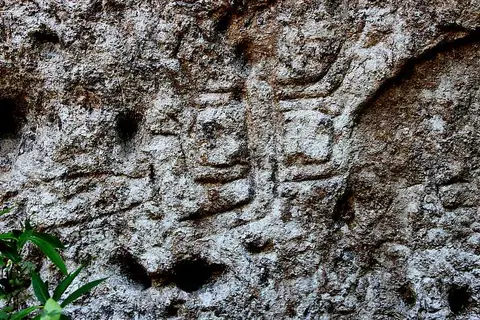 petroglyph
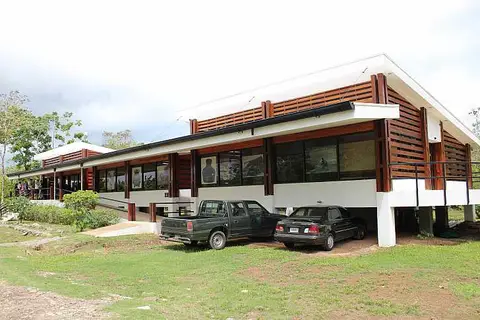 Museo Finca 6
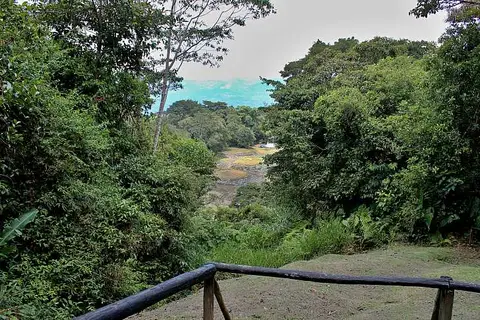 View of Guayabo
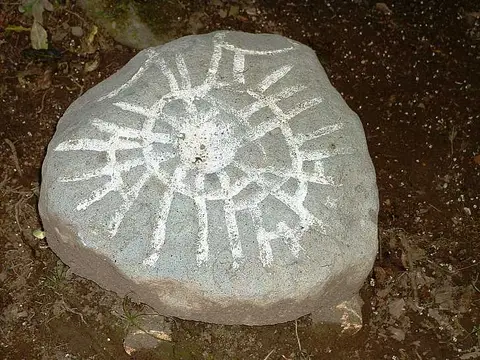 Carved spider web in stone
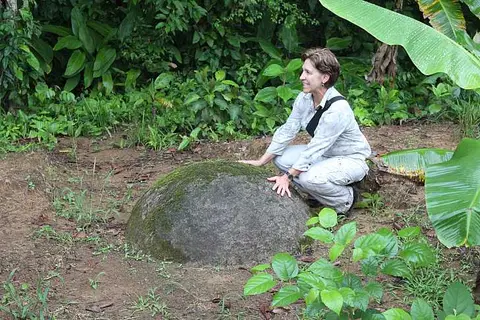 Buried Stone Sphere
 Main Mount
 Felino de Piedra
 Guayabo Mock-up
 Lopez Brother
What are the stone spheres of the Diquís?
In 2014 UNESCO inscribed four settlements of the Diquís delta, Finca 6, Batambal, El Silencio and Grijalba-2, as a World Heritage property. The settlements date from about 500 to 1500 CE, and the spheres range from 0.7 to 2.57 metres in diameter; the largest is at El Silencio. The Museo Nacional reports that most are made of gabbroic rock from the Cordillera Costeña, with a few in limestone and sandstone.

This photo shows the sphere captioned as El Silencio's largest, a heavy dark boulder on short grass, its lower edge stained green. Their purpose is still uncertain. Researchers suggest they marked rank, power and ethnic identity, and some may have stood in open plazas of major settlements. See Diquís Valley Archaeological Sites.
What is Guayabo?
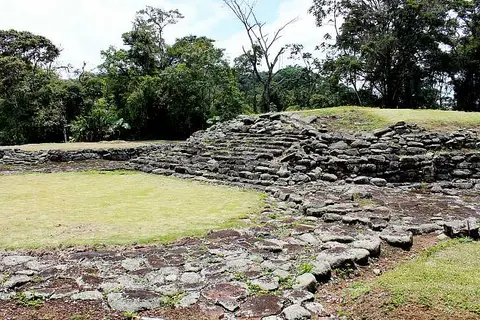
Guayabo National Monument, near the city of Turrialba, was occupied from about 1000 BC to 1400 AD according to SINAC, with its major development around 800 AD. Its structures include 43 mounds, three aqueducts, two plazas and two roads, all built from river stones. Naturalist Anastasio Alfaro first reported the site in 1886, and Law 5300 of 13 August 1973 declared it a national monument. Why the place was chosen, and why it was abandoned before the Spaniards arrived, is not known. See Guayabo National Monument.

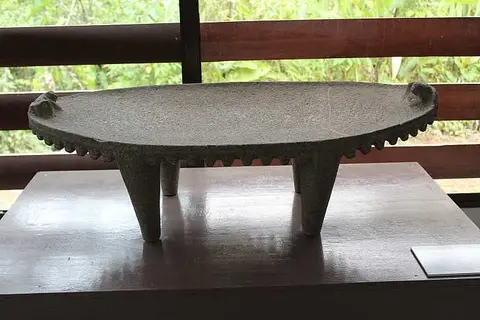
Small finds are less dramatic than the spheres. This photo shows two flat stones with a rounded stone placed on top, captioned as grinding stones found lying around a site.
What is El Farallón?

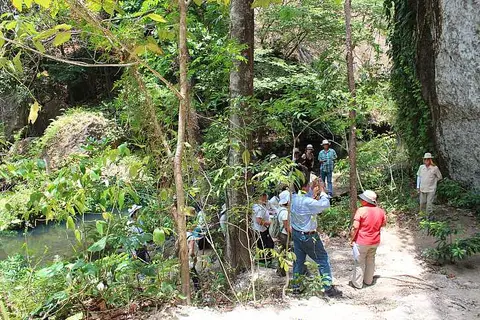
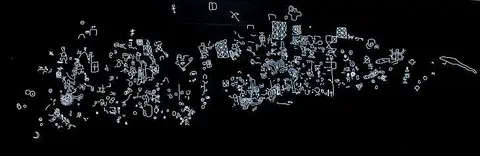
El Farallón, in the Cañas area of Guanacaste, is a large rock wall carved with petroglyphs beside the Cabuyo River. In this photo a group of visitors passes below the grey face. The Museo Nacional found the site in 1987 and it was declared a national monument in 1998. The engravings include human figures, animals such as monkeys, birds and fish, and a sun, and are attributed to the Corobicí. It sits on private land, so access is arranged with the owners; see El Farallón National Monument.
For more on how finds are studied and displayed, see the National Museum. Access, schedules and conditions at all of these sites change, so confirm with the managing institution before travelling.